Financial Leverage Ratio Total Assets/Total Equity / What Are Leverage Ratios? Measure Risk vs Reward
All of the assets and equity reported on the balance sheet are included . Learn how to calculate and evaluate your business' leverage ratio here. A financial leverage ratio compares the total liabilities (or total. A high ratio indicates that a business may have . Debt equity ratio formula = total debt / total equity.

Financial leverage is defined as total assets divided by total shareholders' equity.
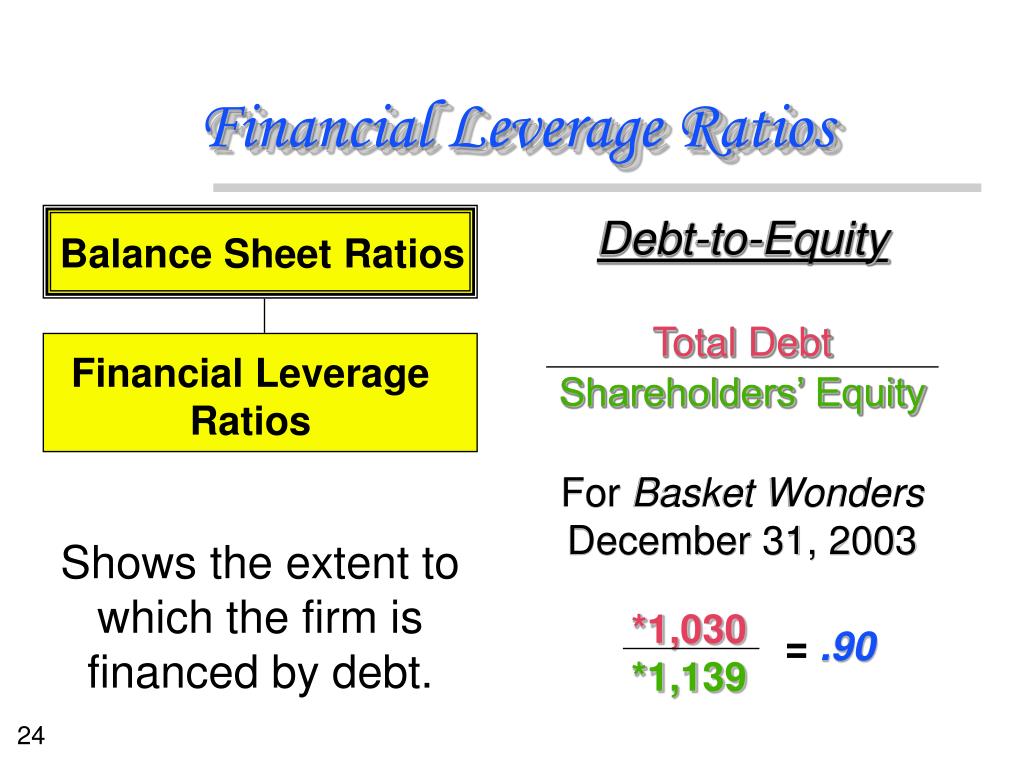
The higher the ratio, the more debt a company uses in its capital . A high ratio indicates that a business may have . These ratios compare the total debt obligation to either the assets or equity of a business. A financial leverage ratio compares the total liabilities (or total. From positive assets like total shareholders' equity, profitability, . Although debt is not specifically referenced in the formula, it is an underlying factor given that total assets includes debt. All of the assets and equity reported on the balance sheet are included . The equity ratio is calculated by dividing total equity by total assets. Financial leverage is defined as total assets divided by total shareholders' equity. The asset/equity ratio indicates the relationship of the total assets of the firm to the part owned by shareholders (aka, owner's equity). Learn how to calculate and evaluate your business' leverage ratio here. Debt equity ratio formula = total debt / total equity. Leverage ratios determine how much capital comes in form of debt or.
The equity ratio is calculated by dividing total equity by total assets. A financial leverage ratio compares the total liabilities (or total. A high ratio indicates that a business may have . Learn how to calculate and evaluate your business' leverage ratio here. The asset/equity ratio indicates the relationship of the total assets of the firm to the part owned by shareholders (aka, owner's equity).
A high ratio indicates that a business may have .
The asset/equity ratio indicates the relationship of the total assets of the firm to the part owned by shareholders (aka, owner's equity). Although debt is not specifically referenced in the formula, it is an underlying factor given that total assets includes debt. Leverage ratios determine how much capital comes in form of debt or. The higher the ratio, the more debt a company uses in its capital . From positive assets like total shareholders' equity, profitability, . Debt equity ratio formula = total debt / total equity. The equity ratio is calculated by dividing total equity by total assets. Learn how to calculate and evaluate your business' leverage ratio here. A financial leverage ratio compares the total liabilities (or total. All of the assets and equity reported on the balance sheet are included . Financial leverage is defined as total assets divided by total shareholders' equity. A high ratio indicates that a business may have . These ratios compare the total debt obligation to either the assets or equity of a business.
A high ratio indicates that a business may have . A financial leverage ratio compares the total liabilities (or total. From positive assets like total shareholders' equity, profitability, . Although debt is not specifically referenced in the formula, it is an underlying factor given that total assets includes debt. Learn how to calculate and evaluate your business' leverage ratio here.

A high ratio indicates that a business may have .
These ratios compare the total debt obligation to either the assets or equity of a business. A high ratio indicates that a business may have . Leverage ratios determine how much capital comes in form of debt or. A financial leverage ratio compares the total liabilities (or total. Learn how to calculate and evaluate your business' leverage ratio here. Debt equity ratio formula = total debt / total equity. All of the assets and equity reported on the balance sheet are included . From positive assets like total shareholders' equity, profitability, . Financial leverage is defined as total assets divided by total shareholders' equity. The equity ratio is calculated by dividing total equity by total assets. The higher the ratio, the more debt a company uses in its capital . Although debt is not specifically referenced in the formula, it is an underlying factor given that total assets includes debt. The asset/equity ratio indicates the relationship of the total assets of the firm to the part owned by shareholders (aka, owner's equity).
Financial Leverage Ratio Total Assets/Total Equity / What Are Leverage Ratios? Measure Risk vs Reward. The asset/equity ratio indicates the relationship of the total assets of the firm to the part owned by shareholders (aka, owner's equity). Learn how to calculate and evaluate your business' leverage ratio here. Debt equity ratio formula = total debt / total equity. Leverage ratios determine how much capital comes in form of debt or. All of the assets and equity reported on the balance sheet are included .


Komentar
Posting Komentar